On July 23, Cincinnati Preservation shared information about proposed changes that could dramatically weaken Section 106 of the National Historic Preservation Act, one of our country’s most important tools for ensuring that communities have a voice when federal projects affect historic places.
Since then, the Advisory Council on Historic Preservation (ACHP) voted on July 24 to approve the proposed rewrite of the regulations governing Section 106. The changes are not yet in effect, and the formal public comment period has not yet opened.
That means now is the time to learn, prepare, and speak up.
This page will serve as Cincinnati Preservation’s Section 106 Advocacy Resource Center. We will continue updating it with information, links, scripts, templates, and opportunities to take action as the federal process moves forward.
Why Section 106 Matters
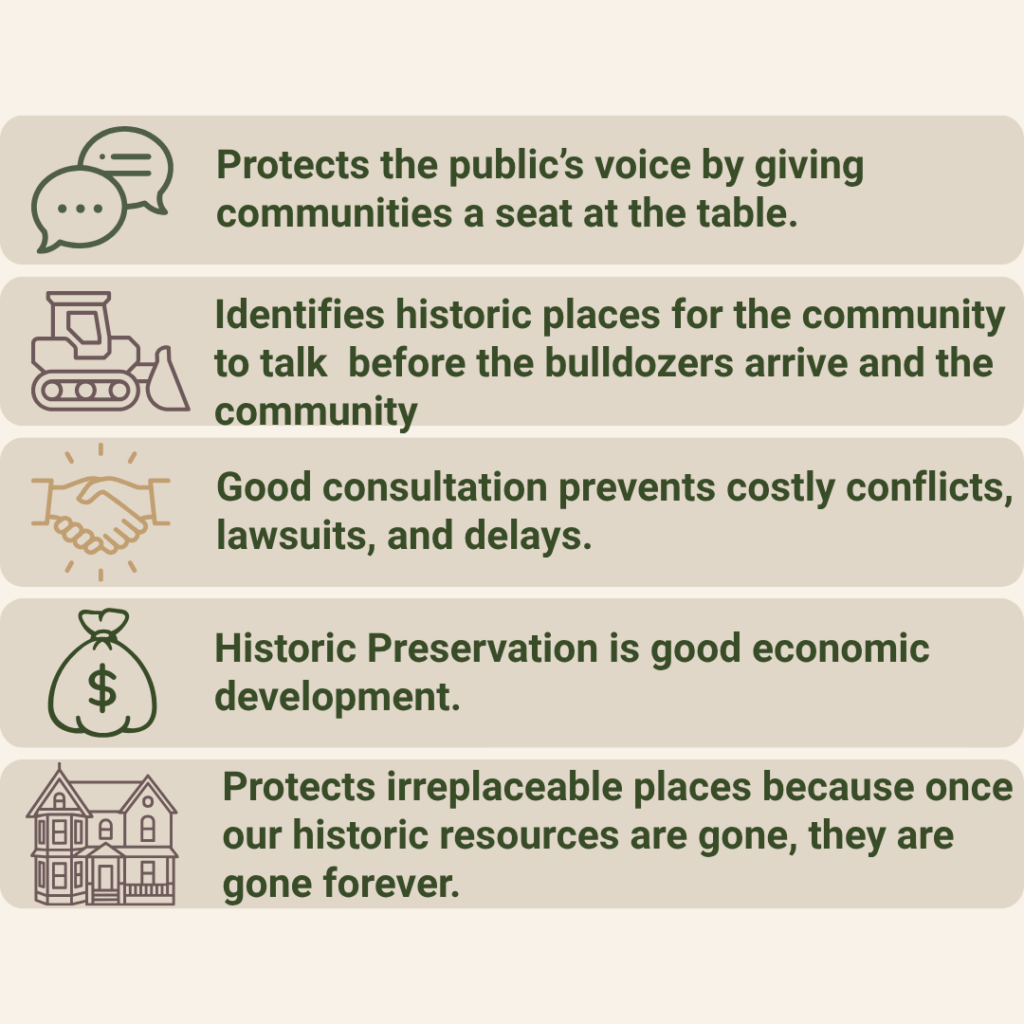
For nearly 60 years, Section 106 has required federal agencies to consider how projects they fund, permit, license, or carry out affect historic places.
It gives communities, state and local governments, Tribal Nations, preservation organizations, property owners, and the public a voice in the process.
The goal isn’t to stop projects. It’s to make them better.
Section 106 creates a process for identifying historic resources, considering alternatives, solving problems, and finding ways to avoid, minimize, or mitigate harm while allowing important projects to move forward.
What Can You Do?
You do not need to be a preservation professional to advocate for Section 106. Here are steps you can take right now.
1. Educate Yourself
Understanding the issue is the first step.
You don’t need to become an expert on federal regulations. Start by understanding what Section 106 does, why public participation matters, and what could be lost if the process is weakened. The following websites and resource for information and updates.
2. Contact Your Governor and Members of Congress Now
You don’t have to wait for the public comment period.
Contact your U.S. Senators and Representative and tell them why maintaining a strong Section 106 process matters to your community.
Contact Information
| Ohio | District Phone | Email/Contact Form |
|---|---|---|
| Governor Mike Dewine | (614) 466‑3555 | Contact Form |
| Senator Bernie Moreno | (513) 684-1021 | Contact Form |
| Senator Jon Husted | (513) 318-1100 | Contact Form |
| Representative Warren Davidson | (513)-779-5400 | Contact Form |
| Representative Greg Landsman | (513) 810-7988 | Contact Form |
| Representative David Taylor | (513) 474-7777 | Contact Form |
| Indiana | District Phone | Email/Contact Form |
|---|---|---|
| Governor Mike Braun | (317) 232-4567 | Contact Form |
| Senator Ted Young | (317)-226-6700 | Contact Form |
| Senator Jim Banks | (260) 321-7130 | Contact Form |
| Representative Erin Houchin | (812) 288-3999 | Contact Form |
| Kentucky | District Phone | Email/Contact Form |
|---|---|---|
| Governor Andy Beshear | (502) 564-2611 | Contact Form |
| Senator Rand Paul | (270) 782-8303 | Contact Form |
| Senator Mitch McConnell | (859) 578-0188 | Contact Form |
| Representative Thomas Massie | (859) 426-0080 | Contact Form |
Sample Email
Subject: Protect the Public’s Voice in Section 106
Dear Senator/Representative [NAME],
I am a constituent from [CITY/COMMUNITY], and I am writing because I am concerned about proposed changes to the regulations implementing Section 106 of the National Historic Preservation Act.
For nearly 60 years, Section 106 has given communities a voice when federal projects affect historic places. It does not prevent projects from moving forward. Instead, it encourages federal agencies, communities, Tribal Nations, state and local governments, property owners, and other stakeholders to identify concerns early and find practical solutions.
I urge you to oppose efforts that weaken meaningful consultation, public participation, or consideration of historic and culturally significant places.
Our tax dollars should build the future without erasing our past.
Sincerely,
[NAME]
[CITY, STATE]
Phone Call Script
Hello, my name is [NAME], and I’m a constituent from [CITY/ZIP CODE].
I’m calling because I’m concerned about efforts to weaken Section 106 of the National Historic Preservation Act.
For nearly 60 years, Section 106 has given communities, Tribal Nations, and local governments a voice before federal projects affect historic places.
I’m asking Senator/Representative [NAME] to oppose efforts that weaken Section 106, public participation, or meaningful consultation.
Please help protect the public’s voice. Thank you.
Talking Points You Can Use
Templates make getting started easier, but your personal story makes your message stronger.
Think about the places that tell your community’s story.
It might be your neighborhood, a Main Street, a historic school, a church, a burial ground, a park, a cultural landscape, a battlefield, or a place connected to your family’s history.
Tell your elected officials why that place matters and why people who know and care about their communities deserve a seat at the table before decisions are made.
Below are some talking points you can use to frame your comments.
Protect the public’s voice. Communities deserve to be heard before decisions are made that permanently affect the places they value.
Good consultation creates better projects. Finding concerns early allows agencies and communities to solve problems before they become expensive conflicts.
Section 106 does not stop development. For nearly 60 years, major highways, bridges, infrastructure, energy projects, and other federal undertakings have moved forward while complying with Section 106.
Local knowledge matters. The people who live in a community often know its history, resources, and significance better than someone reviewing a project from hundreds of miles away.
Preservation is more than old buildings. Section 106 can involve neighborhoods, archaeological sites, sacred places, burial grounds, landscapes, Main Streets, parks, battlefields, and other places important to our shared history.
Once it’s gone, it’s gone. Historic and culturally significant places are not renewable resources.
Preservation and progress can work together. The question isn’t whether we build for the future. It’s whether we can do so thoughtfully while respecting the places that tell our story.
3. Start Preparing Your Public Comments
The formal public comment period has not yet opened, but you don’t have to wait to start thinking about what you want to say.
Effective comments should go beyond simply saying, “I oppose this.”
Consider including:
Who you are. Explain your connection to preservation or your community.
Why Section 106 matters to you. Include a local example whenever possible.
What concerns you. Identify the particular proposed change that concerns you rather than objecting only to the proposal generally.
Evidence. Examples from real projects, communities, costs, delays, or successful consultation can strengthen your comment.
What you want changed. Explain what you believe should remain in the regulations or how a proposed provision should be changed.
Keep it organized and concise. Clear, substantive comments can be more useful than lengthy form letters.
Cultural Heritage Partners recommends responding directly to numbered questions in the eventual Notice of Proposed Rulemaking, citing specific regulatory provisions when possible, using real-world evidence, and proposing alternatives rather than simply objecting.
We will provide additional guidance, templates, deadlines, and a direct link for submitting comments when the formal public comment period opens.
4. Share this Information.
One of the simplest things you can do is help someone else understand why this matters.
Share our July 23 post. Forward this article. Talk about Section 106 with your neighborhood organization, historical society, local government, or friends.
Many people have never heard of Section 106 until a federal project threatens a place they care about.
We should not have to wait until then to understand the importance of the process.